Community-Supported Fair Trade: Celebrating 30 Years of Our Interfaith Program
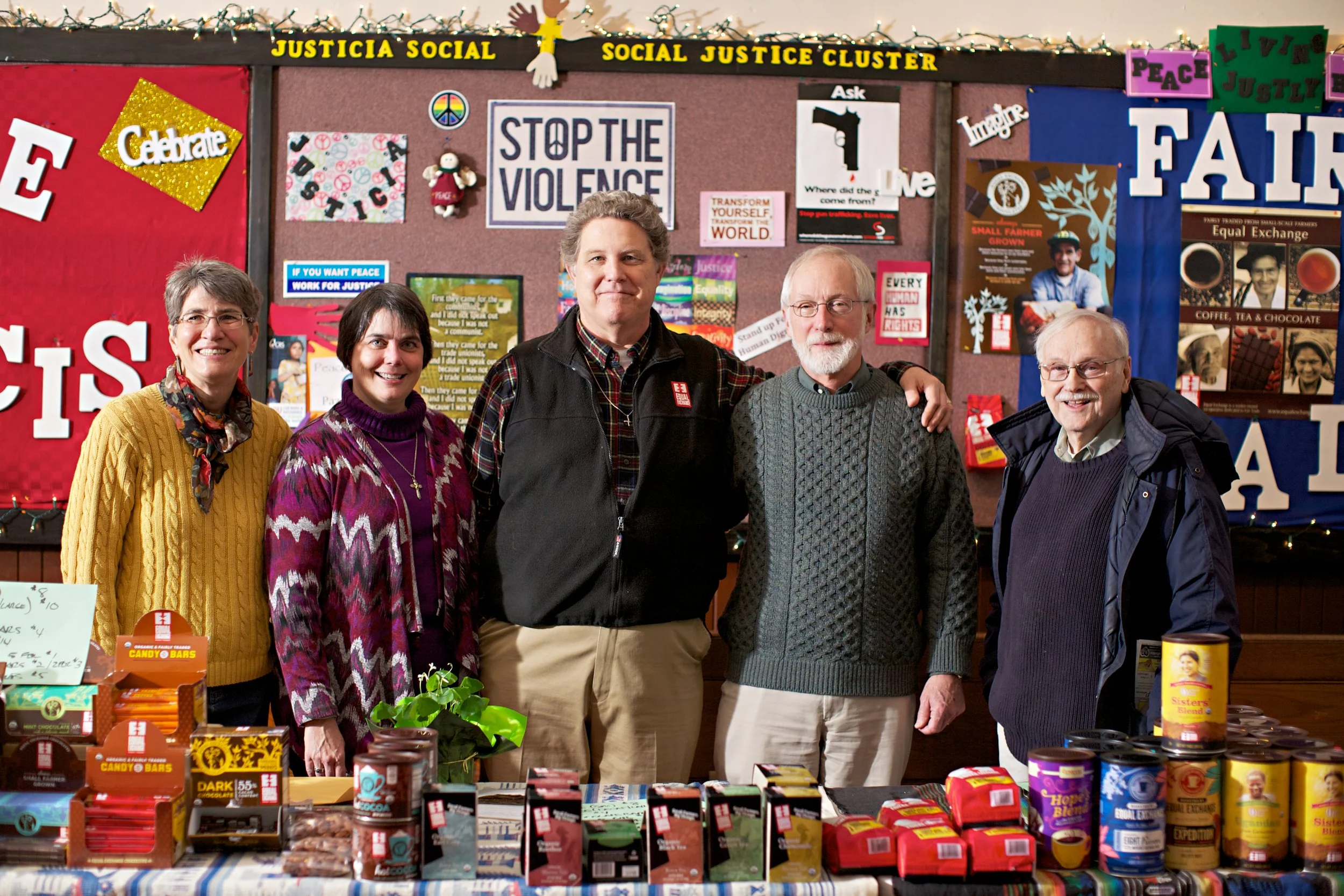
Peter Buck of Equal Exchange with parishioners of St. Mary of the Angels, Roxbury, Massachusetts, 2013.
Rethinking the supply chain
Equal Exchange was founded to create a more just, equitable, and environmentally sustainable food system. Connecting people to the producers of their food is a simple but powerful mechanism to drive change. So, when Equal Exchange introduced the Interfaith Program three decades ago, it was a natural fit for like-minded communities to impact the world with their collective buying power.
“One of Equal Exchange’s greatest innovations is that we are an alternative trade organization connecting farmers and consumers directly,” said Rink Dickinson, Equal Exchange Co-Founder and President. “And it doesn’t get more direct than our Interfaith program.”
The Interfaith Program started in 1996, when a leader from Lutheran World Relief read an article about Equal Exchange in a magazine and asked to become a partner. Based on the fair trade movement that started in Europe and Latin America in the 1980s, Equal Exchange and many congregations supported the movement's core tenets—alleviating poverty, advancing civil rights, creating food co-ops that offer healthy options, and raising awareness that the environment was being desecrated and needed protection. At the time, American consumers were slowly learning about fair trade, a new concept being promoted in local food co-ops that was building momentum.
Over the years, many more denominations partnered with Equal Exchange, strengthening the organization and widening the availability of fairly traded products, which were often difficult to find and purchase in stores. It was profoundly important to Equal Exchange’s mission. In the program’s early years, faith-based groups represented about a quarter of Equal Exchange sales.
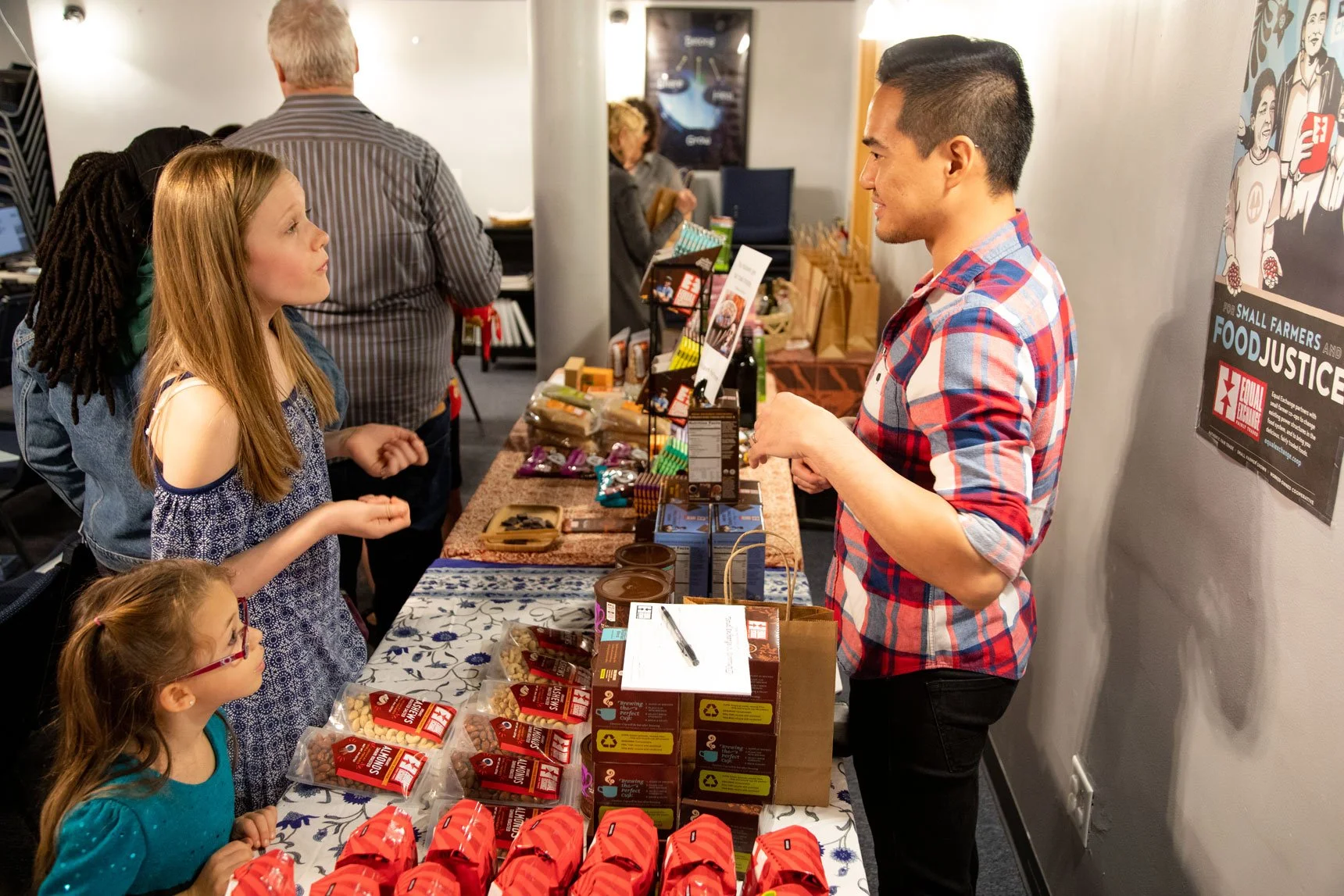
A table sale of Equal Exchange products at the River Church in Quincy, MA, 2019.
Beyond buying and selling
To this day, the Interfaith Program, by serving coffee at their fellowship hours and selling products at church events, contributes to the financial stability that allows Equal Exchange to invest in and take risks with farmer partners. It also provides congregations across the country with an easy—and delicious—way to practice their fair trade ministries.
Father John Grace, pastor at Immaculate Conception Church in Hampton, Virginia, explained why he decided to introduce fair trade to his congregation like this: “I wanted us to be a universal or Catholic community in the best sense of the word… Actions demonstrate values and beliefs. So it was easy for me to turn to fair trade as a global practice…”
And it doesn’t stop at coffee hour. Equal Exchange has brought Interfaith groups on delegations to visit some of our small farmer partners and see their impact in person. Staying overnight in a farmer’s home, eating simple meals prepared over a fire, seeing the stages of coffee preparation, and even picking coffee has created lifelong, committed fair trade advocates. Judy McEvitt, the Equal Exchange coordinator at Spirit of Christ in Arvada, Colorado, went on two delegations and expressed it this way: “Every month, we remember the faces and the stories of the generous and hard-working farmer families that we met in Chiapas, Mexico, and El Salvador. We share their stories along with the fruits of their labor with the parishioners, and this has sustained our passion and mission for 22 years.”
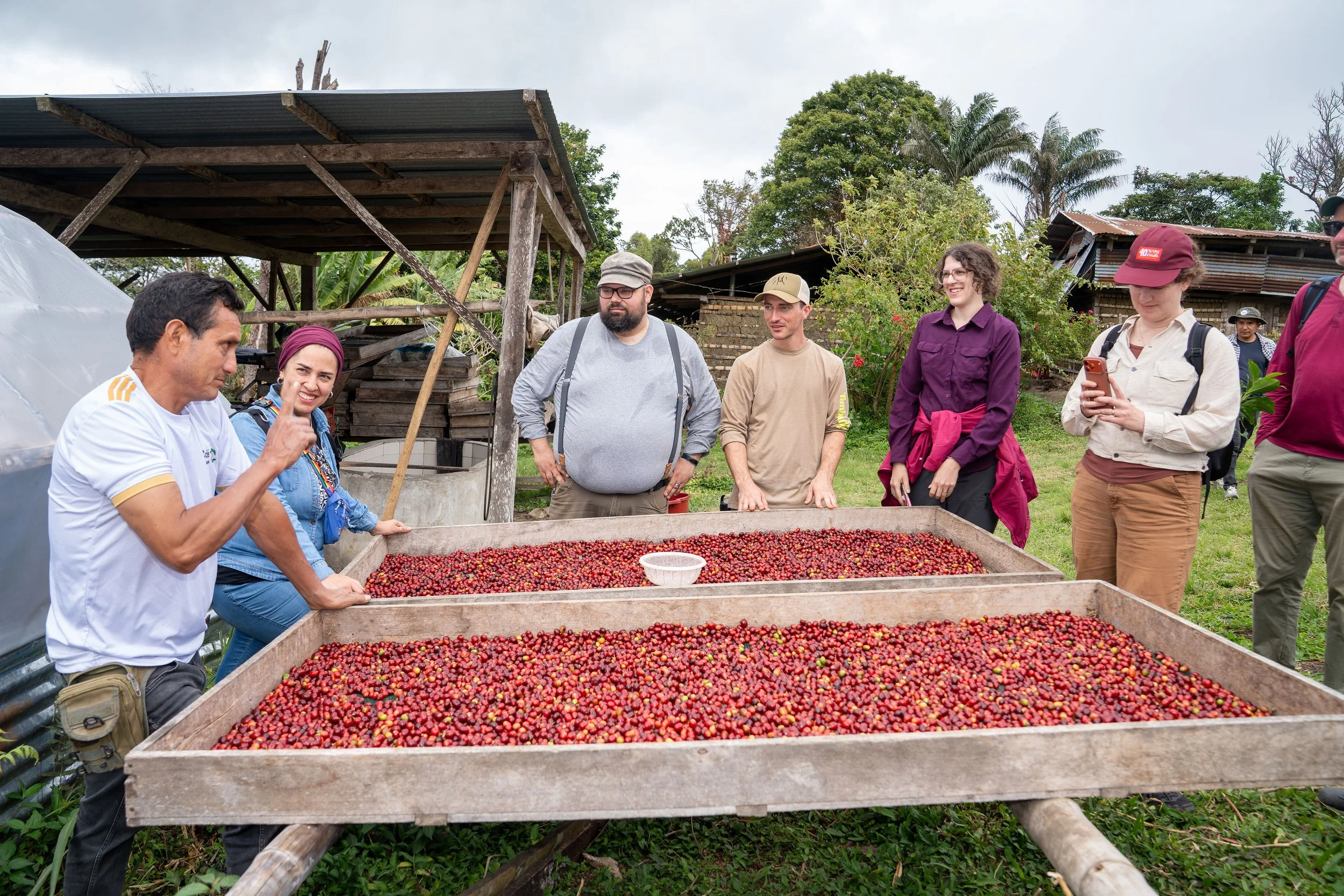
Gerardo Goicochea explaining how to properly sort freshly harvested coffee cherries on his organic farm, part of the Sol & Café cooperative in Northern Peru, 2026.
Protecting the environment, cup by cup
The care that Equal Exchange’s partners take when growing their crops not only makes for a better cup of coffee, but also a better environment, too. Farmers like Gerardo Goicochea from the Sol & Cafe coffee cooperative in Peru underscore just how deeply integrated their thoughts and actions are with every part of the ecosystem. From the coffee trees he plants to the natural vegetation, the soil, the microorganisms, the animals, and even the water, he is proud to grow organically. “You might find a pessimistic farmer,” he said. “But for me, this is what brings me joy.”
This farming ethos fits a central ministry for many churches called “Care for Creation,” which is a group within the church that works on projects to help protect the natural world. Equal Exchange’s commitment to supporting sustainable and organic farming is a natural way to put the ministry into a weekly practice, and in some cases, has grown into a decade’s-long relationship that is steady and resilient.
Even during the COVID pandemic, when folks weren’t attending church in person, congregants found a way to still support fair trade. They responded to the crisis by creating buying clubs, delivering to homes, and bundling products in bags distributed from their garages, porches, or even a drive-thru in their church parking lot. Jane Chandler, in rural Maine, even delivers via kayak!
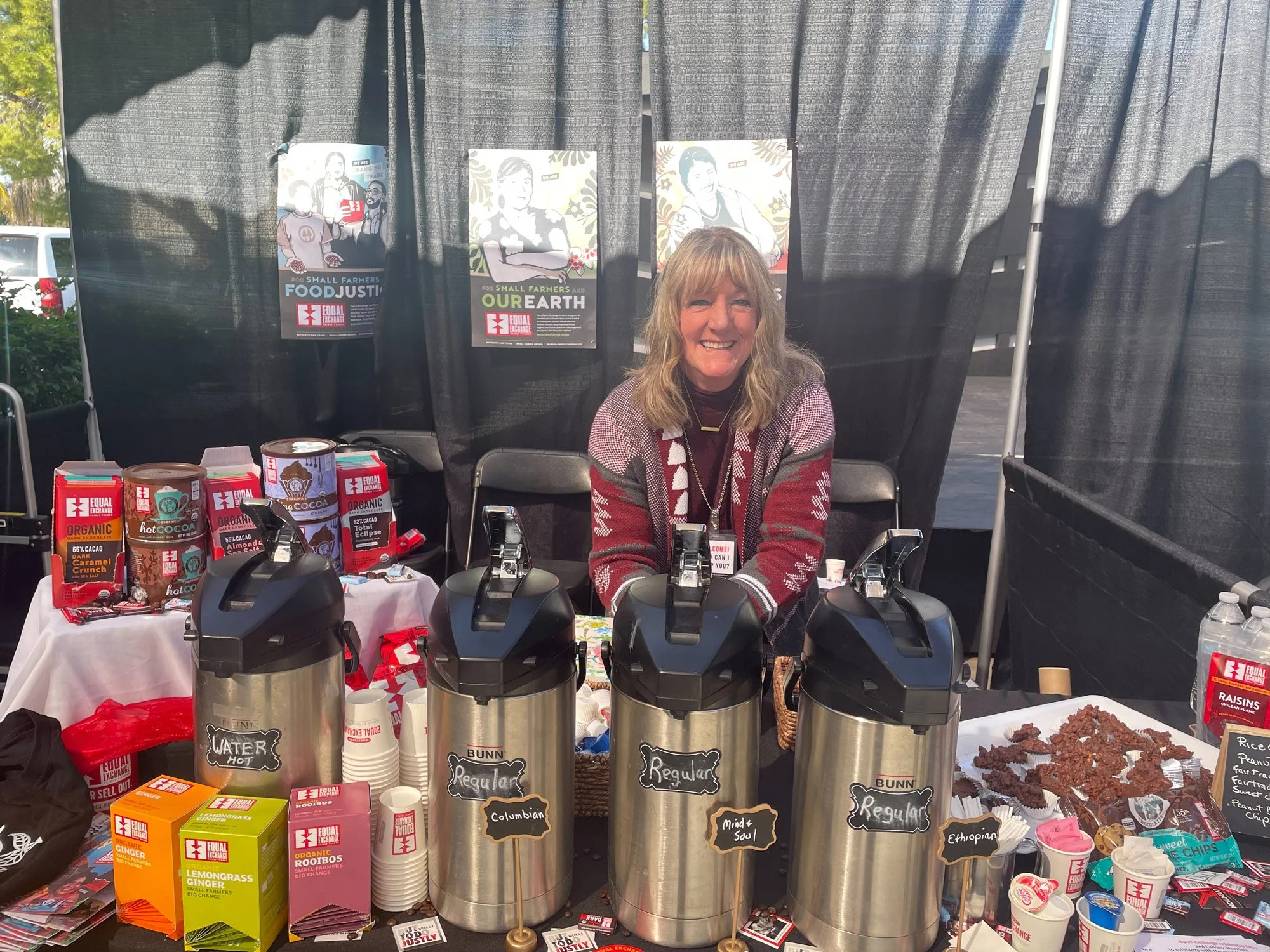
Susan Wells serving coffee at the Calvary Murrieta Social Justice Conference, CA, 2023.
Supporting communities of faith now
Today, the Interfaith program takes different forms. Many congregations serve Equal Exchange coffee for their fellowship hour. Others sell a variety of Equal Exchange products weekly or monthly after services. Some host outdoor markets and fair trade gift bazaars for the holidays or set up a booth at farmers’ markets. In Falmouth, MA, eight churches and a synagogue have sponsored an alternative interfaith gift fair featuring Equal Exchange products every November for the past 15 years.
What Equal Exchange celebrates in 30 years of its Interfaith Program is a vital, vibrant community-centered way to put belief into action, with the potential for even greater impact. “Ponder this,” said Jane Dow of First Congregational Church in Mankato, Minnesota. “Approximately 138 million Americans regularly attend church with a combined income of $2.5 trillion. If we all just bought one fair trade purchase on a regular basis, we would impact millions of families striving to lift themselves out of poverty.”
If you or someone you know is interested in learning more about Equal Exchange’s Interfaith Program, please reach out to interfaithreps@equalexchange.coop—we would love to hear from you!