Antonio Gutierrez is an unusual Peruvian farmer in two ways: he’s an agricultural engineer and only 26 years old. As one of six agronomists and technicians serving about 300 grower members, he is intimately familiar with the efforts by Rio y Valle to help banana plants survive the stresses of climate change. An Equal Exchange delegation visited Antonio and other co-op staff at their collection center in northern Peru this past July.
The biofertilizers that his cooperative produces include a beneficial fungus cultivated in starter beds. In Spanish the starter is called “matriz,” or “mother” (think sourdough starter). Antonio stood by the biofertilizer tanks intently describing his view of modern farming practices: “they are starving the plants.” In contrast, he gestured to the patio where blue tarps completely shade the beneficial fungus Trichoderma and declared, “That is the mother of development.”
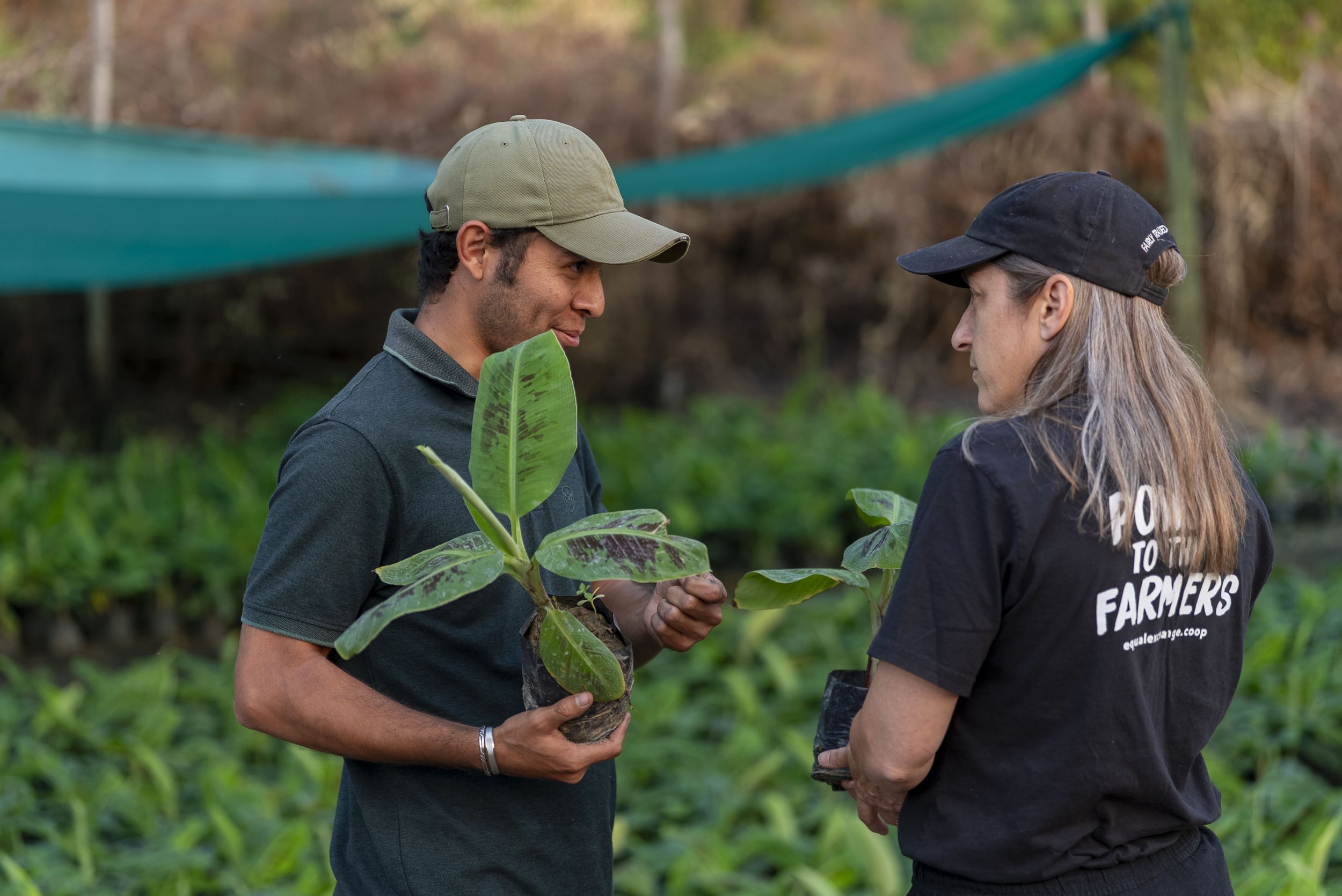
Antonio shows Jessie a tolerant seedling that Rio y Valle distributes free as part of trials to defend against the banana disease caused by TR4.
With this succinct statement, Antonio captured the essence of smallholder cooperatives and the ripple effects they can have on their members’ families, neighbors, and even regional economies.
The monoculture of bananas, coupled with decades of extractive conventional crops and now changes in weather patterns, results in banana plants being vulnerable to rampant infection. In Peru, the biggest threat is Tropical Race 4 (TR4), which causes Fusarium wilt. One grower at nearby co-op AVACH, Juan Rujel, lost his entire farm to TR4. After cleaning and resting the land, AVACH gave him more than 1,000 resistant seedlings; he planted them with the intention of becoming a demonstration plot. Juan even slept in the fields overnight for one month to protect the valuable seedlings from theft. Unfortunately, just a few weeks after our visit, Juan could see evidence of wilt in the plants.
Both of these farmer cooperatives use fairtrade premiums to produce and distribute soil amendments, biofertilizers, and microorganisms to enhance immunity against disease and fortify plants. Beyond these inputs, Rio y Valle facilitates knowledge and skill transfers that dramatically improve productivity and quality. The co-op has implemented protocols and trainings in pruning, mulching, harvesting, sizing, packing, and more. Without the infrastructure of the co-op, a solo grower would find it difficult to understand current food safety requirements and meet them.
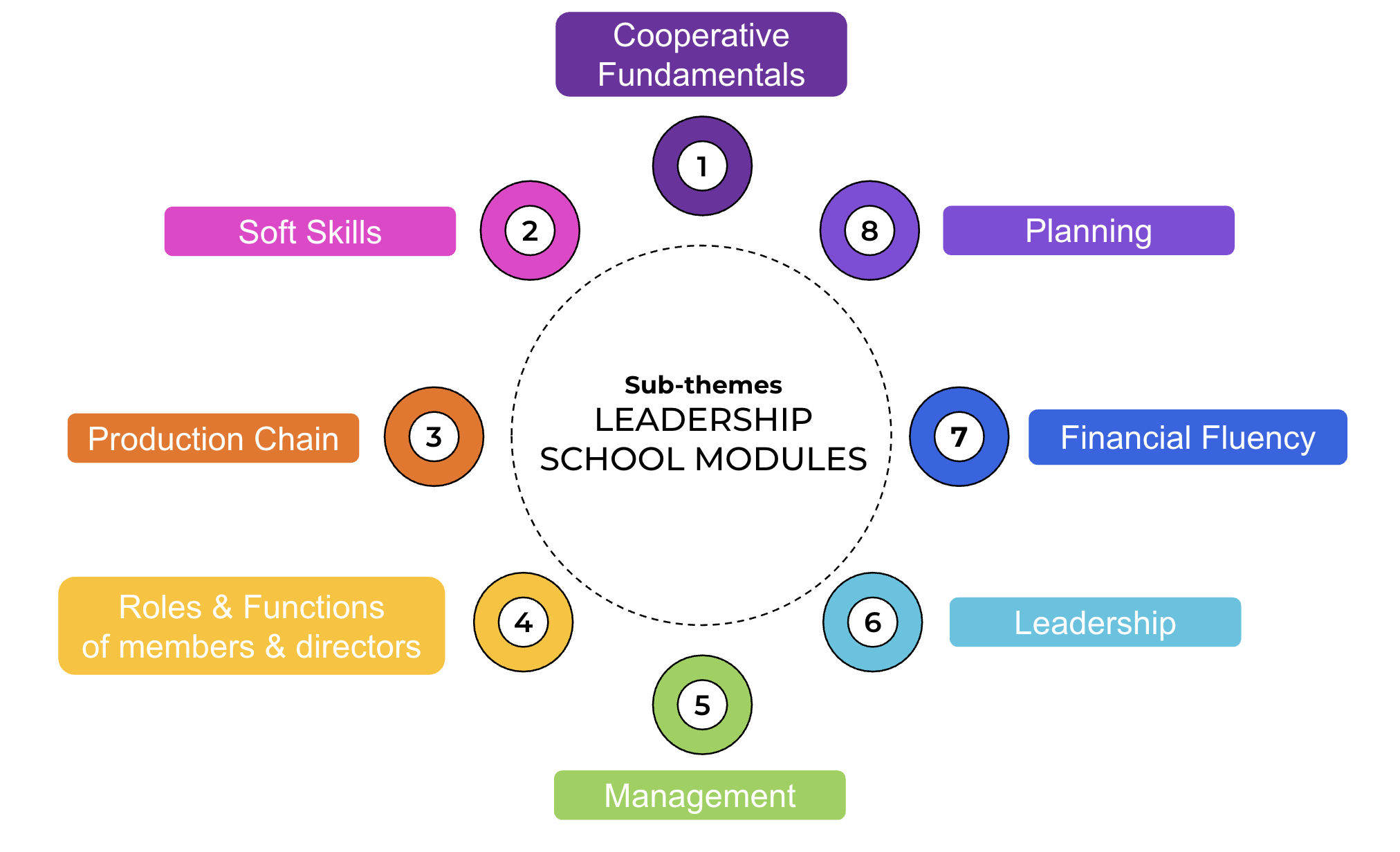
The work to repair and feed the soil mirrors how the co-ops’ people-practices sustain the members and their agricultural communities. As part of Equal Exchange’s Cooperative Development Project, Rio y Valle identified leadership succession as a key challenge to keep the organization operating. First, they formed and trained a Facilitation Team. Next, having developed eight learning modules, emerging leaders participated in workshops about planning, finance, governance roles, conflict resolution, and other areas. Quoting from the project report, “The trained leaders became models to follow, encouraging collaboration and professionalism among members and strengthening the reputation of Rio y Valle as a trustworthy cooperative.”
Much like the mother fungus catalyzes a waterfall of positive effects for the soil and banana plants, patronizing Rio y Valle and Equal Exchange feeds resources into the organizations that are methodically and creatively bolstering people power.