Unpacking Power Dynamics with a Banana Co-op
The history of bananas makes many people uncomfortable.
The industry is rooted in power imbalance. Whether it was tax-free land in Costa Rica (for United Fruit/Chiquita in 1884), forced labor by financing paramilitaries (2024 verdict for Colombian victims¹), or chemicals like DBCP sold for use abroad even after having its production shut down in the U.S. for causing sterility² (e.g. to Standard Fruit/Dole in Nicaragua³), there’s no shortage of examples of abuse of power and control.
As recently as May 2025, Chiquita responded to a labor strike in Panama by entirely shutting down its operations and firing thousands of workers⁴. Just three months later, the company agreed to reopen operations⁵—without any unionized banana workers⁶.
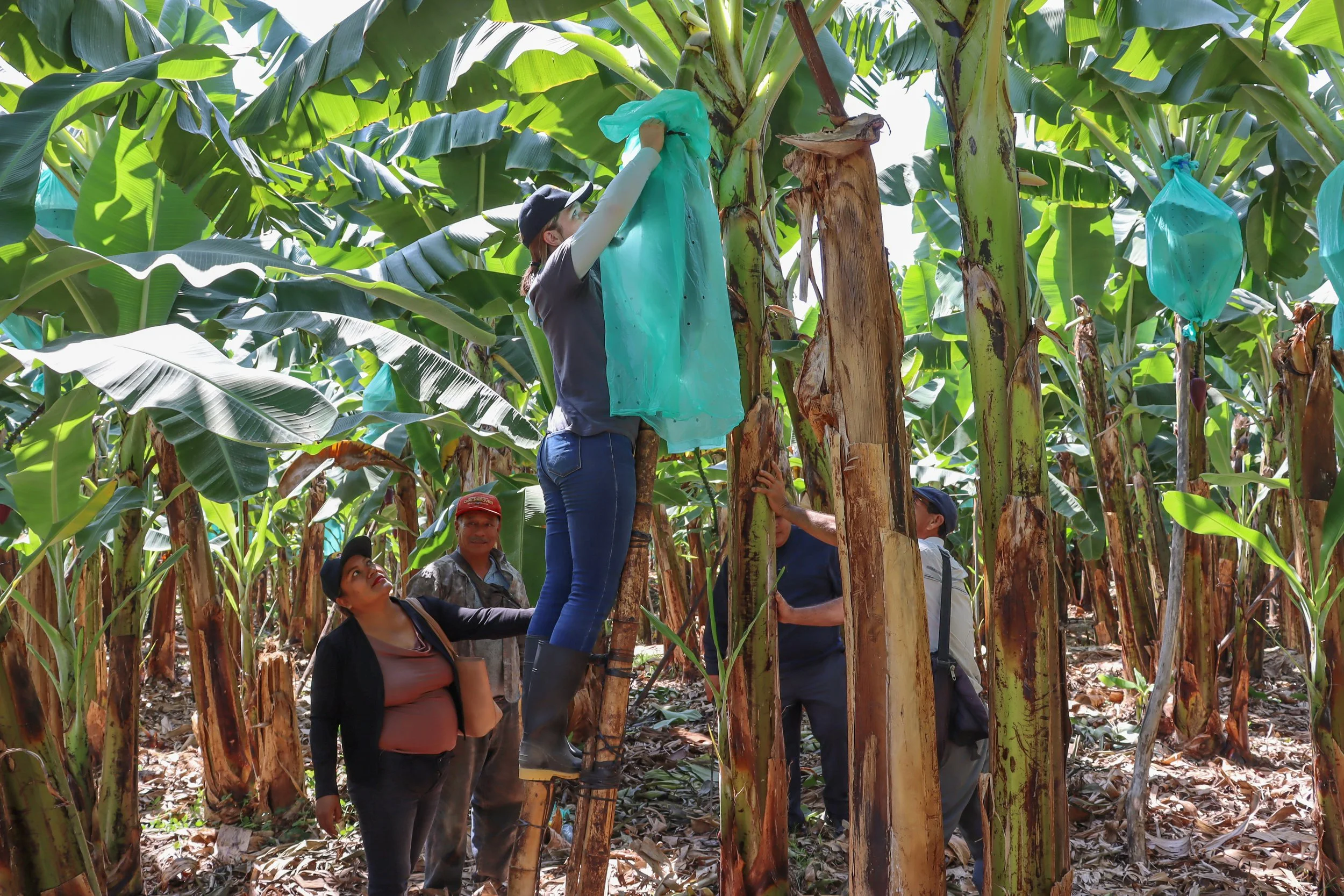
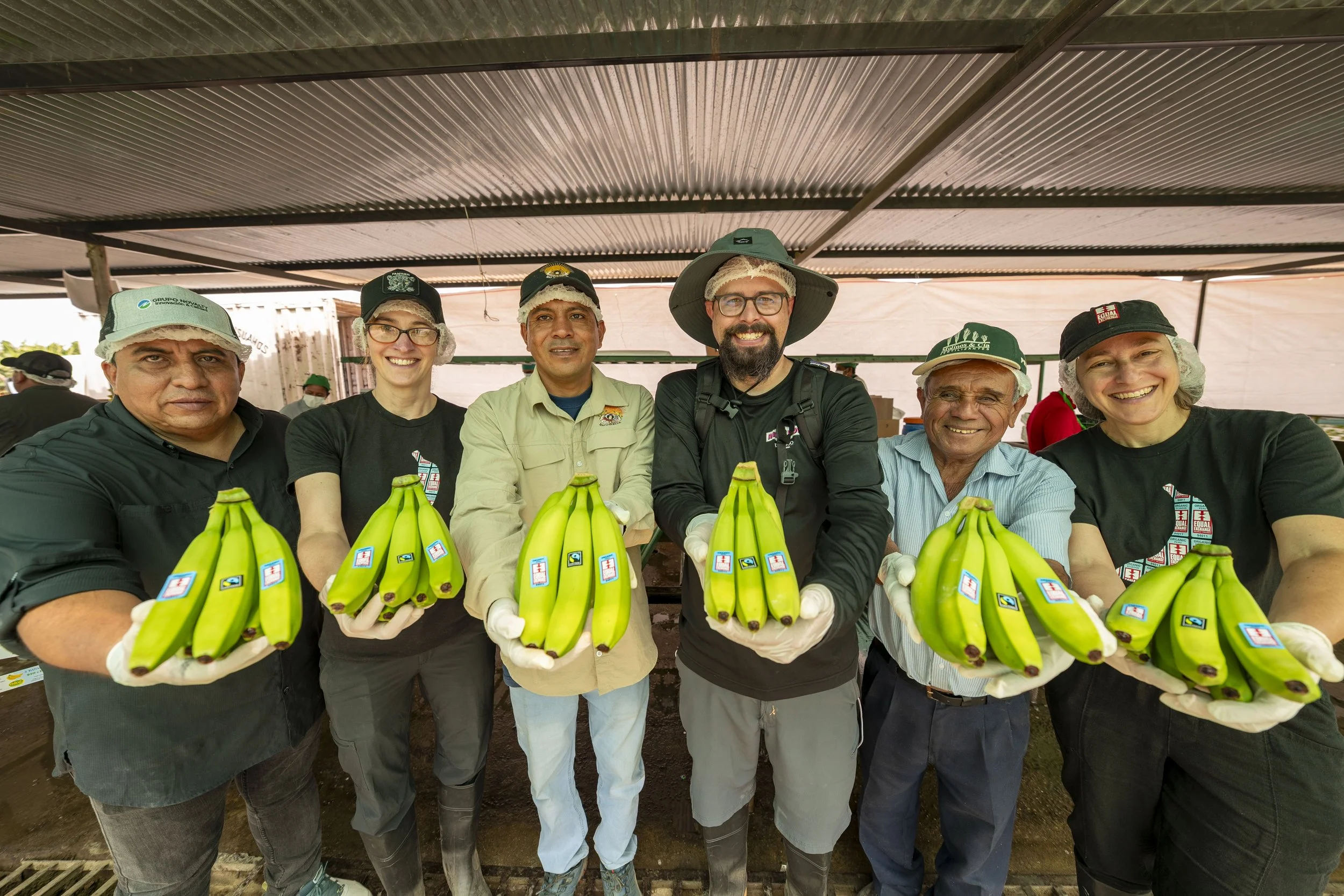

In contrast, Peru only began exporting bananas in the late 1990s. Most are from small-scale growers, and almost all of Peru’s exported bananas are organic⁷.
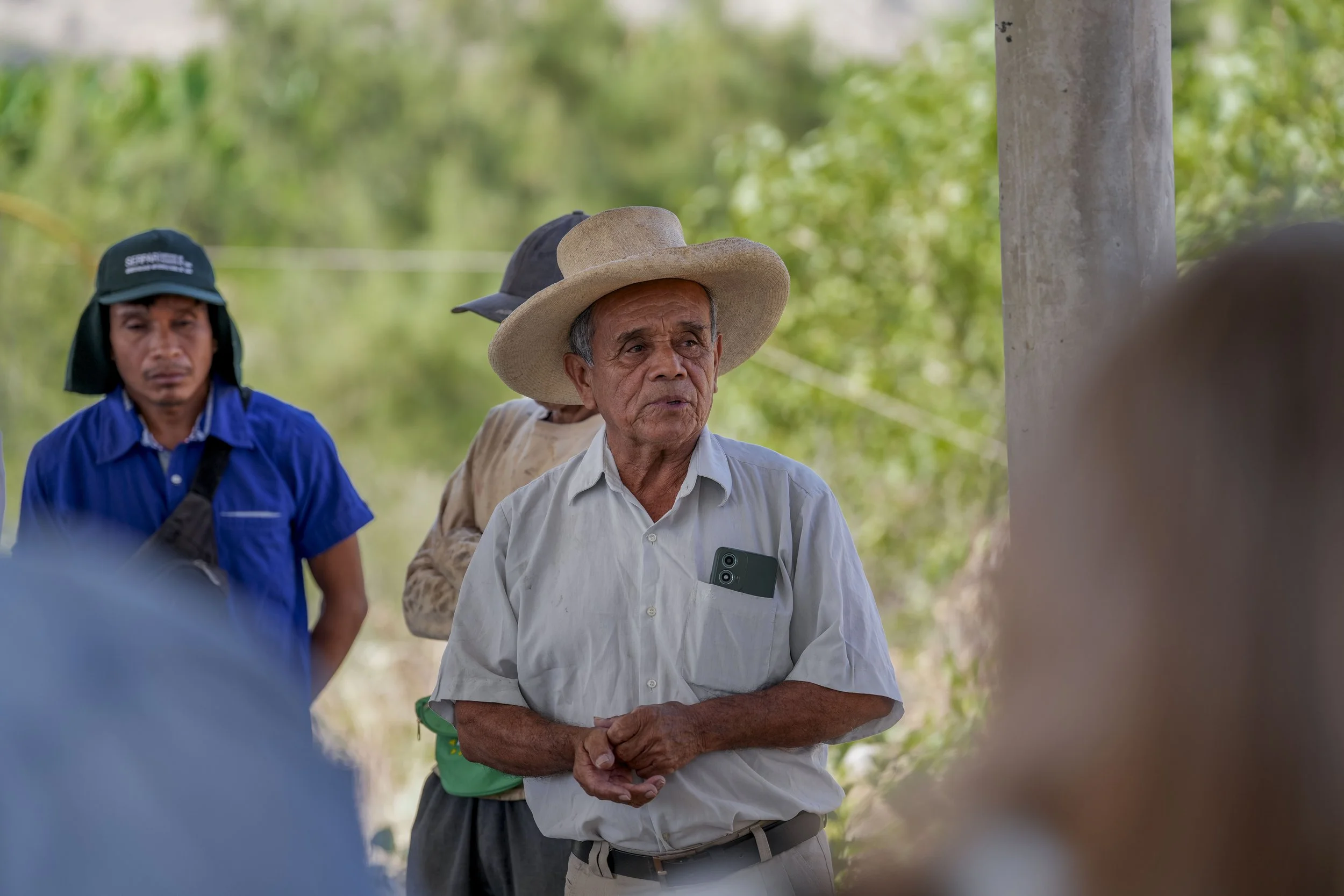
At Equal Exchange’s partner Rio y Valle Cooperative, now-president Juan Oviedo and fellow producers formed an association back in the mid-1980s and started growing bananas on land they had occupied a few years prior. As part of a national land reform, they requested and received 12 hectares to plant with bananas because this land was, as Juan put it, “dusty, dry, and not productive.”
Member Marilú Saavedra elaborated with pride: her father used to be an employee on someone else’s farm. After the reform, he acquired 2 hectares, joined the association, and instead became part of the decision-making.
Juan continued, “In 2003, we exported for three years to Dole, organic but not fair trade. When we heard about the small producers’ association, we wanted to be a part of it because of fair trade. We saw that fair trade had more social benefits and was good for our kids. Fair trade buyers fulfilled their promises.”
Together, these growers in La Horca exert power they would rarely wield alone. The average farm size in this co-op is 1 hectare or less, comparable to two football fields. At that scale, it’s not practical to address the water needs of a plot. Together, this modest group of growers successfully requested permission to install an irrigation system. Since they are currently using pumps on generators, the new flooding system will save fuel, money, and fumes.
Consider this scenario in reverse:
What would happen if there were no farmer co-op for these particular banana growers? None of them could fill a truckload. None has a relationship with an international steamship line. Very few of them could handle export paperwork. They've got their hands full caring for hundreds of plants: pruning, fertilizing, harvesting in rolling rotation. Maybe they’d return to cultivating cotton and corn, earning only seasonal income. Would they need loans the rest of the year? Would they become a laborer on someone else’s farm or in a factory? Would they migrate abroad to seek work?
With buyers who see and value the unique contributions of smallholders, bananas serve as means to a steady business that simultaneously stabilizes and revives community.
Works Cited
2. https://timesmachine.nytimes.com/timesmachine/1977/09/11/issue.html
3. https://www.nytimes.com/1995/12/06/world/us-pesticide-kills-foreign-fruit-pickers-hopes.html
4. https://www.aljazeera.com/news/2025/5/23/us-banana-giant-chiquita-fires-thousands-over-panama-strike
5. https://www.freshfruitportal.com/news/2025/08/27/government-efforts-chiquita-panama-return/
7. https://openknowledge.fao.org/items/021e8956-7a40-4d15-a721-86e5b7b55276