Why the Survival of Coffee Starts with Small Farms
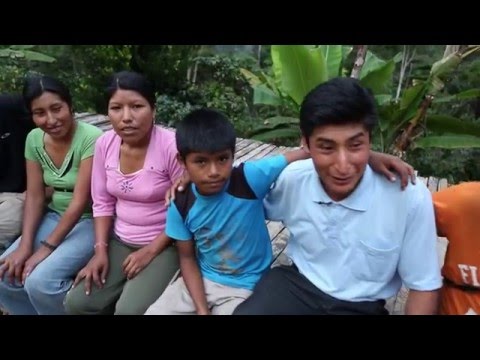
Go behind the scenes to experience coffee farming in the Peruvian jungle and learn why small farmers organize into cooperatives, how many processing steps are involved in growing and exporting coffee, and the ecology of growing coffee while protecting crucial ecosystems. Our direct relationships with coffee producers often take us to wild places. We filmed a journey to Peru's Bahuaja-Sonene National Park to visit with our coffee farming partners of CECOVASA co-op. CECOVASA (The Organization of Agrarian Coffee Cooperatives of the Sandia Valleys) was founded in 1970, when a group of Peruvian coffee farmers in the Lake Titicaca region came together to avoid selling their beans to exploitative middlemen, and instead process and export their beans collectively. CECOVASA now includes eight coffee co-operative communities that are comprised of mostly Quechuan and Aymara indigenous peoples near the Bahuaja-Sonene National Park and the Tambopata-Candamo Nature Reserve. These communities are very remote, 10 to 15 hours by truck from Juliaca, the nearest city.