Pulling Through a Difficult Year in Chocolate
What sky-high cocoa prices, limited supply, and tariffs taught us about the food system
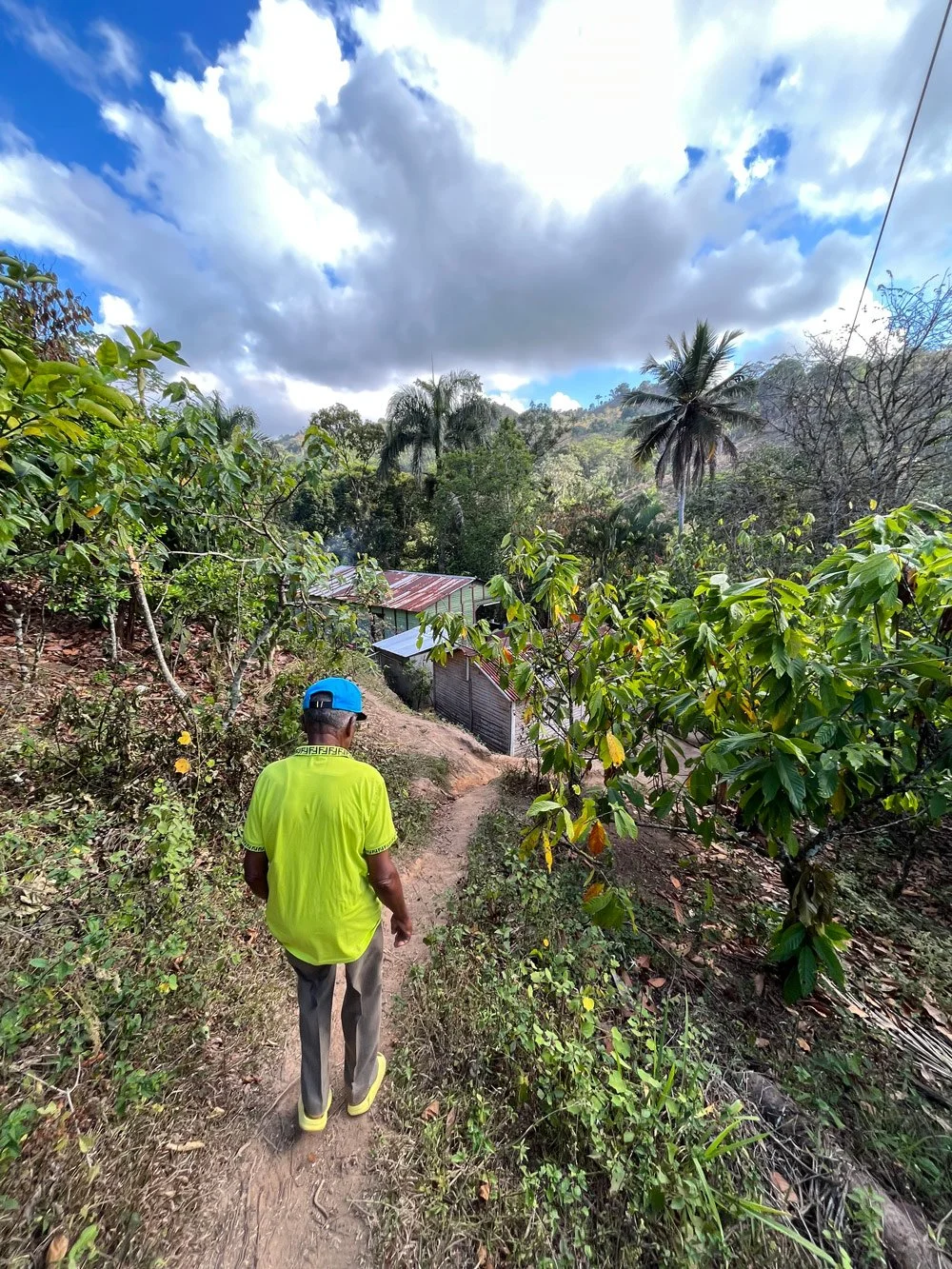
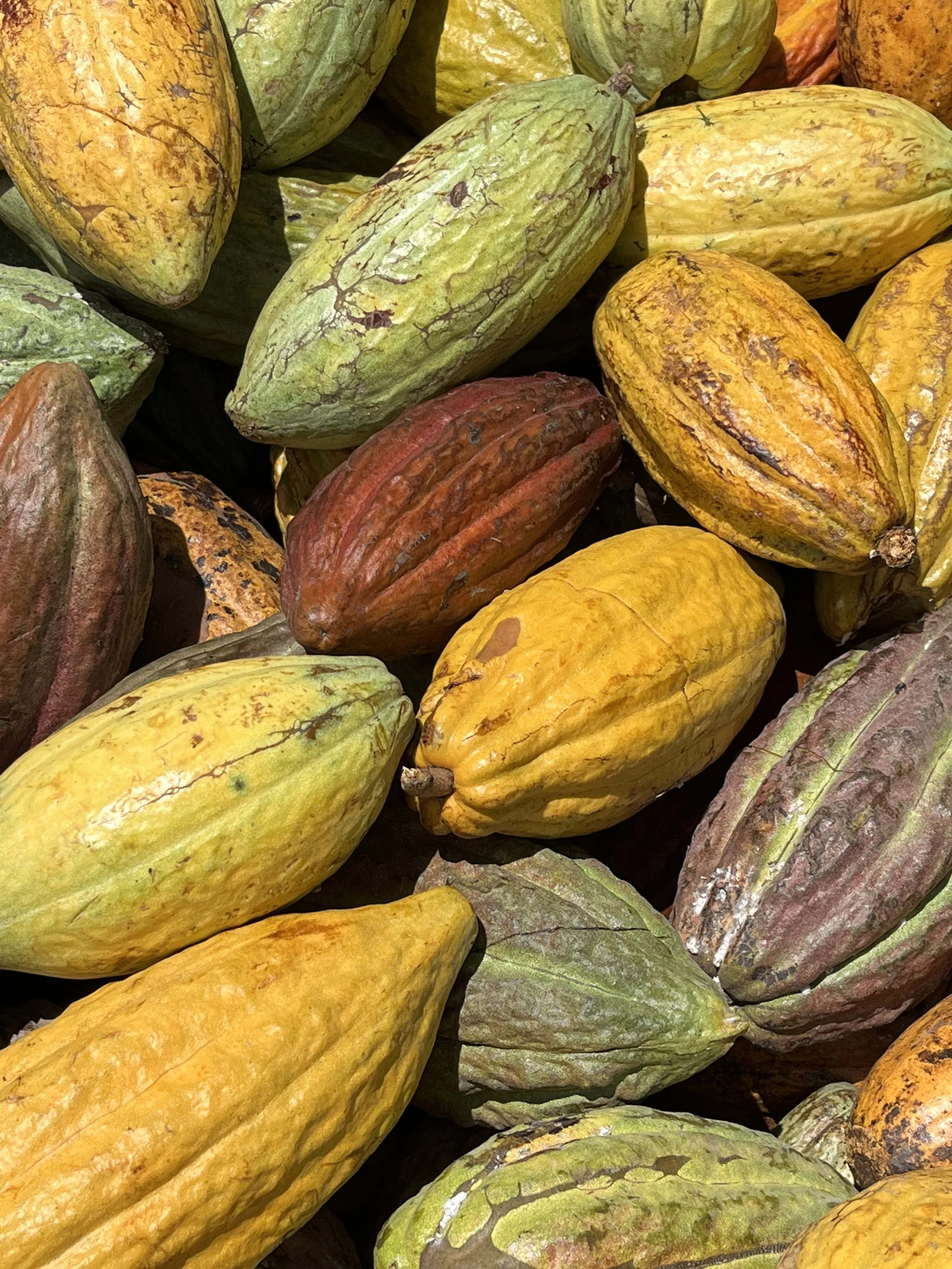
Left: Walking through a cacao farm at FUNDOPO co-op, Dominican Republic. Right: Close-up of harvested cacao pods.
The food system is not set up to favor small-scale producers, small or medium independent businesses, or truly mission-based organizations. This is exactly why Equal Exchange and our network of partners and supporters do what we do: to demonstrate that another way is possible, and in fact is increasingly necessary. Last year, we faced–and survived–a landscape where conditions were hostile.
To achieve our mission, we balance two often oppositional forces: offering better terms and pay for small-scale farmers while also offering competitive products that succeed in the U.S. marketplace.
Some tensions we navigate are decidedly on one side of the supply chain (i.e., farmer side) or the other (market side). Last year, the challenges spanned the whole spectrum. Our lines of chocolate and cocoa products faced a triple threat, with prolonged sky-high prices, scarce cocoa availability, and the unexpected factor of tariffs. While things are somewhat stabilizing, the threats took a toll and offer a cautionary tale.
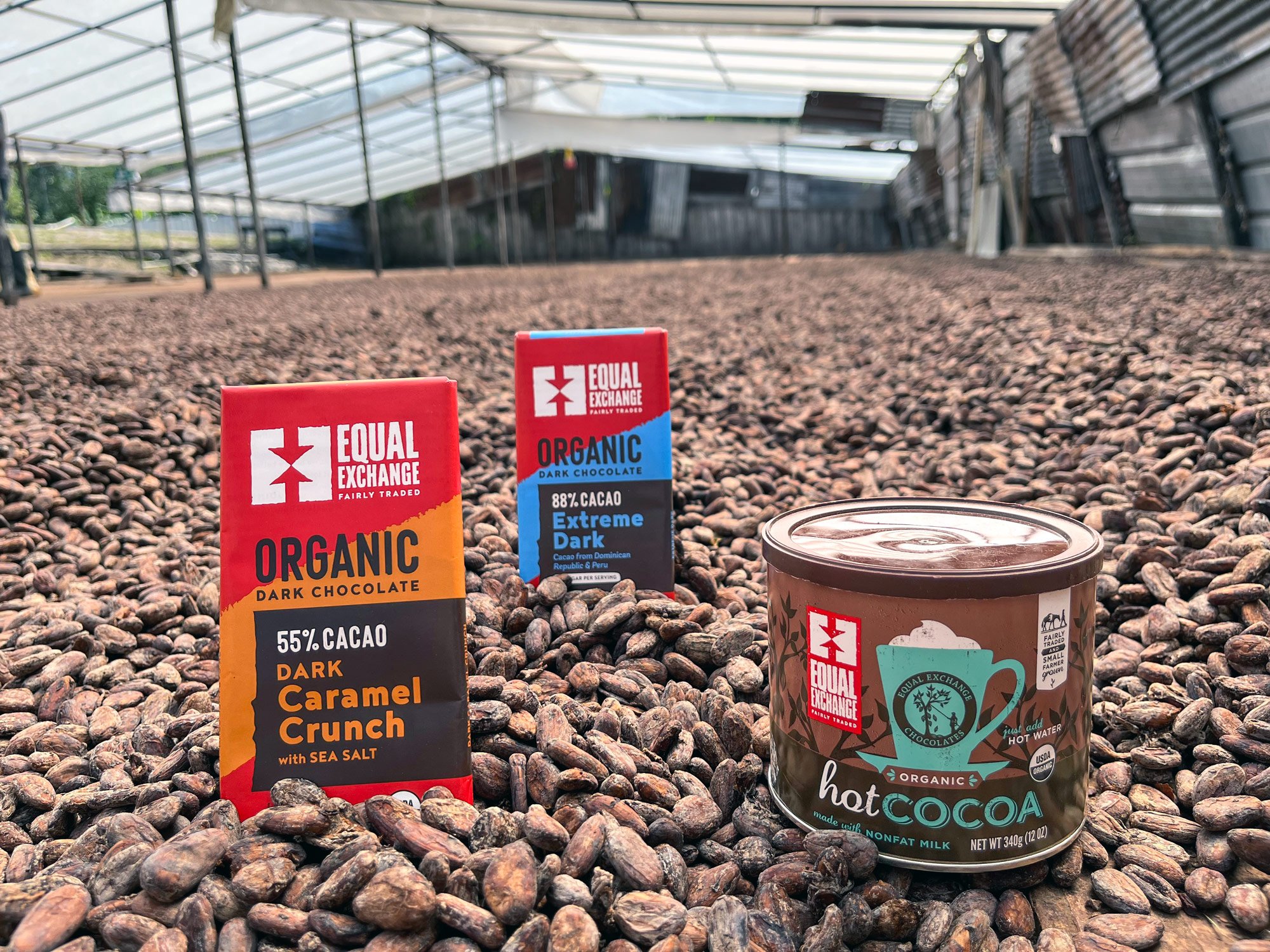
Equal Exchange products on a bed of drying cacao beans at a YACAO collection center, Dominican Republic.
Sky-high prices
For 18+ months, due to limited global supply, prices on the open cocoa commodity market were consistently at historically high levels. Starting at the end of 2023, cocoa market prices went from about $2,500 per metric ton to over $12,000 per metric ton. At the time of writing this article, that market is still over $4,000 per metric ton, which seems low compared to the $12,000 high, but several years ago would have been considered a high market price itself.
In the Equal Exchange context, we pay more than commodity prices to begin with, to support farmer co-ops and organic farming. This meant that our costs increased tremendously: 57% increase on our average cost of a can of cocoa; 79% increase per chocolate bar; 90% increase per bag of chocolate chips.
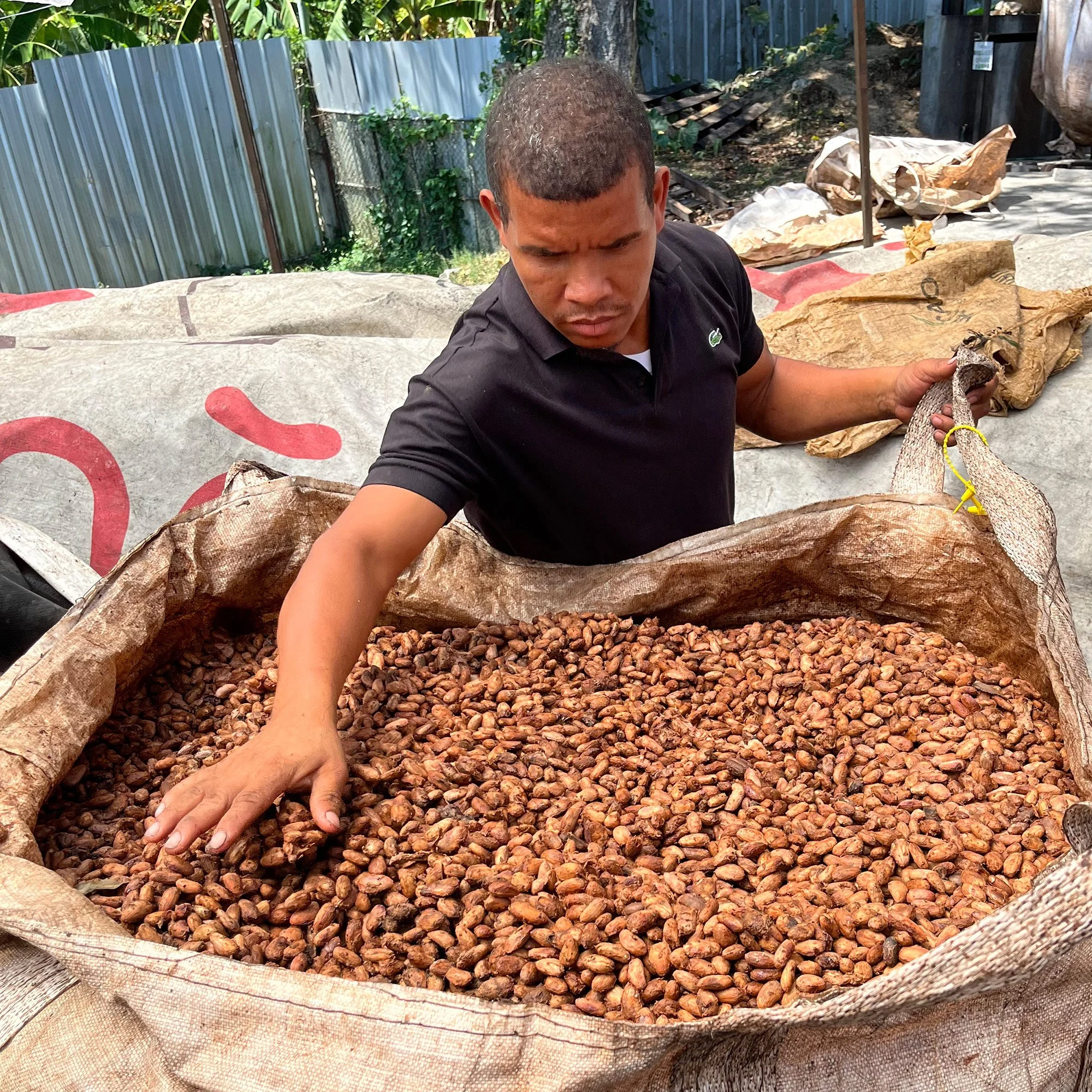
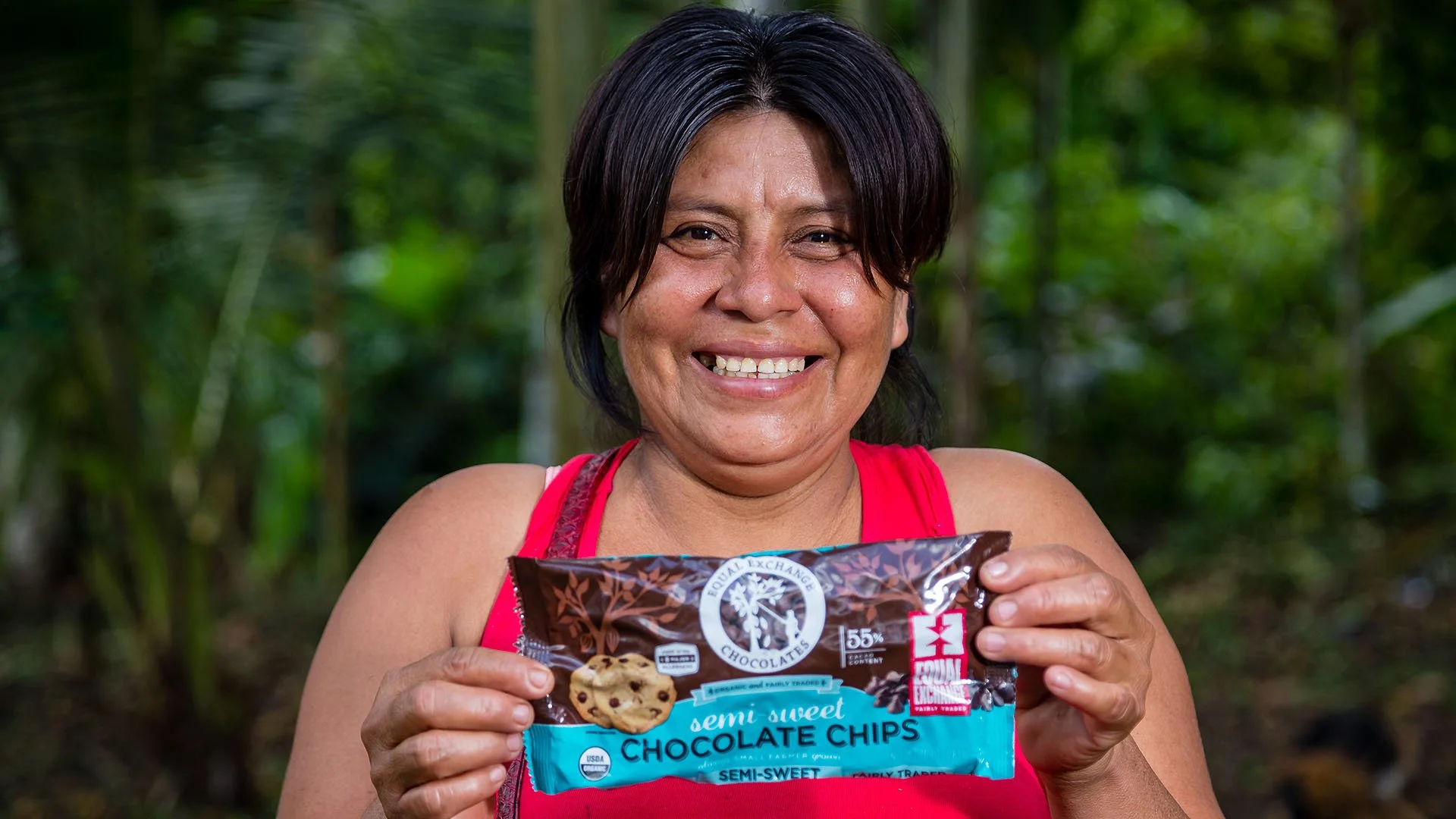
Left: fermenting beans from the FUNDOPO co-op, Dominican Republic. Right: Joisy Tuanama Lumba, a member of the Huingoyacu community of ACOPAGRO co-op in Peru.
Limited supply
During this high market, prices were directly related to limited supply available worldwide. The top two factors limiting supply were climate change and systemic underinvestment in cocoa farms. Particularly in the largest producing countries of Ivory Coast and Ghana, a series of challenges—droughts, floods, diseased cocoa trees—led to reduced harvests and poor quality. Competition for the limited supply was fierce, with the largest corporations (read: cash-flush) often being the companies who got inventory.
During most of this 18-month period, due in large part to our long-term, mission-aligned relationships with our farmer partners and chocolate manufacturers, we were able to source and produce our various products—chocolate bars, chocolate chips, and cocoa powders. Like others, our costs and prices went up, but we were able to access cocoa and chocolate. We partner with small farmer co-ops primarily in the Dominican Republic, Peru, and Panama. While these co-ops have also been challenged by climate change, we have long supported their programs of innovative farm management and farm investment, helping them to be more resilient.
All that said, as time stretched on with these pressures in full effect, we ultimately could not access enough cocoa powder.
Rather than see our product line go from strong overall to weak overall, we cut some products in an effort to conserve the supply that we had, to protect the viability of only our best-selling cocoa items. We now have fewer cocoa items, which means a net loss of volume, and smaller purchases from our farmer partners.
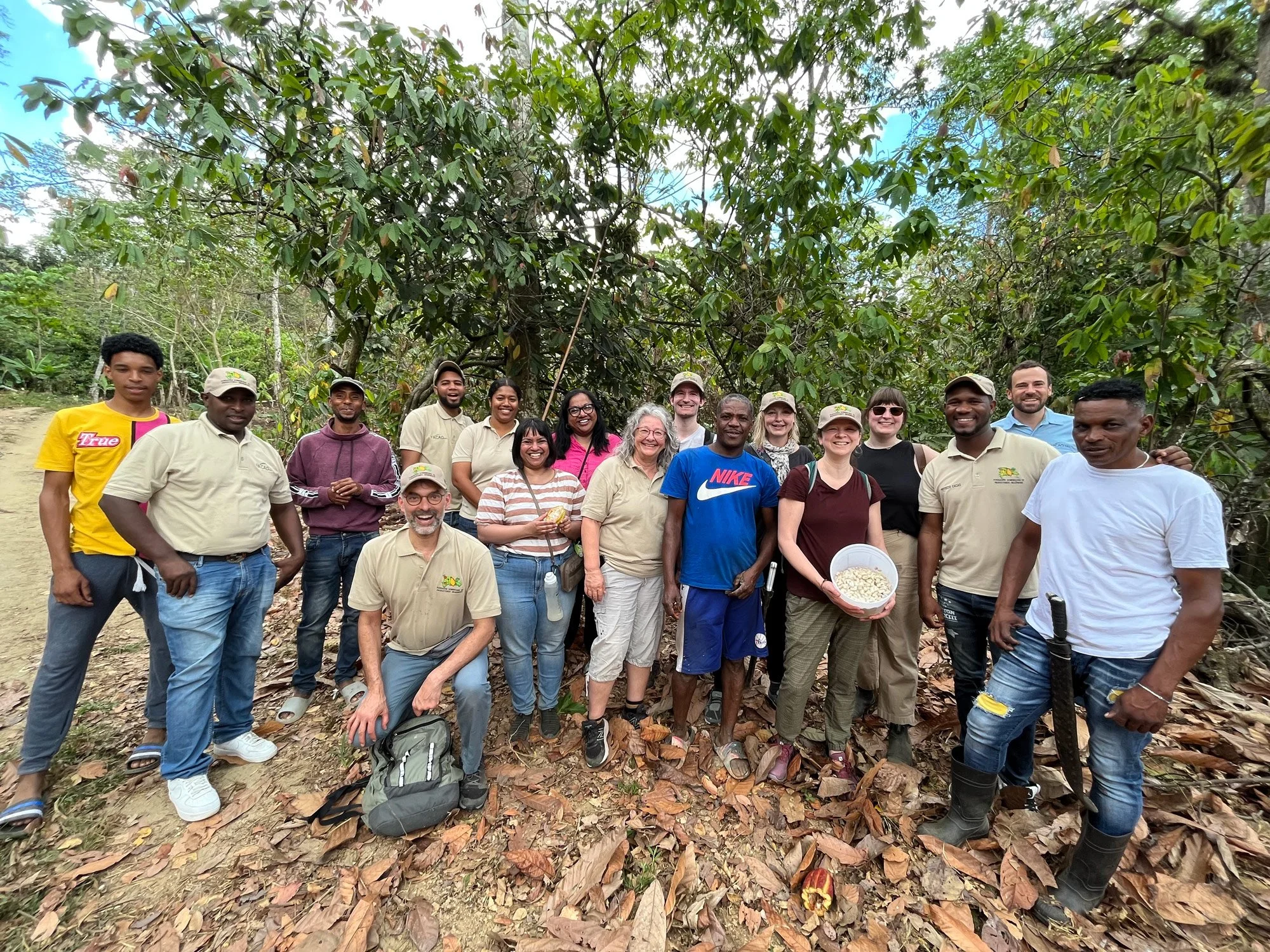
Equal Exchange and La Siembra visiting FUNDOPO co-op in the Dominican Republic.
Tariffs
Our fair trade model intentionally limits the number of players in our supply chain, as one important strategy for farmers to get a fairer amount. Equal Exchange takes on the role of importer. Unlike most of our competitor brands, this meant that we were the ones navigating tariff complexities across a wide spectrum of countries and directly paying the unexpected, significant tariff costs.
For some products, for example, chocolate chips from Peru, the tariff was a “modest” 10%. For our chocolate bars or our cocoa powder, produced at our long-term manufacturing partner in Switzerland, the tariff was a whopping 39%. Along with supply constraints, this forced our hand to seek a new manufacturing partner from a lower-tariffed country. While the end product and relationships are solid, we moved some business away from a reliable long-term trade partner, not for any wrongdoing, but rather due to what appeared to be an arbitrary tariff map and its economic consequences.
Particularly in the case of our chocolate line, large tariffs were on top of an unprecedented historic high-cost cocoa market, which was on top of our mission-based commitment to pay higher, above-market prices to farmers. On some store shelves, we saw some competitor chocolate bars (not organic, not fair trade, not imported from Switzerland) for sale to shoppers at a shelf price comparable to what our costs were.
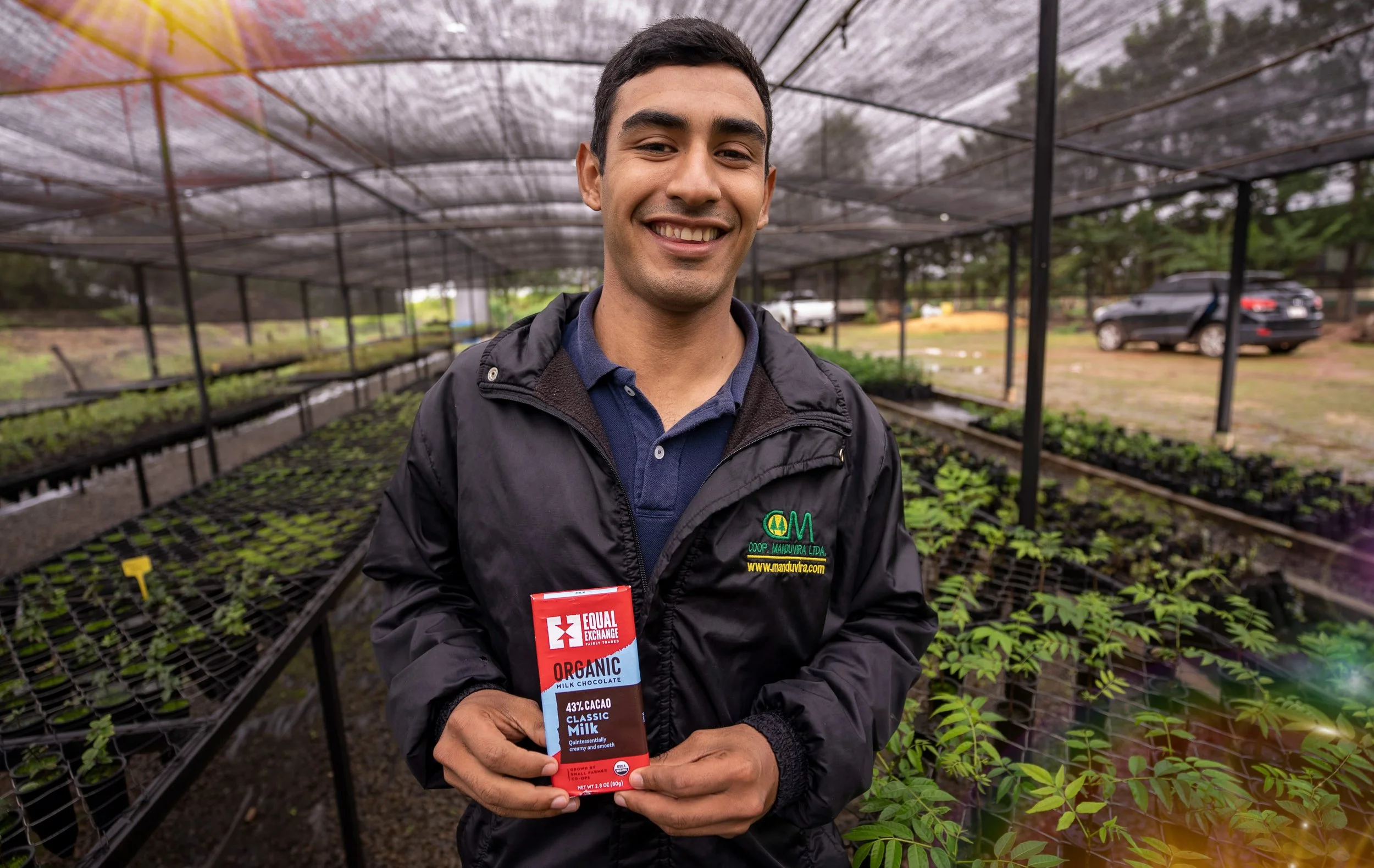
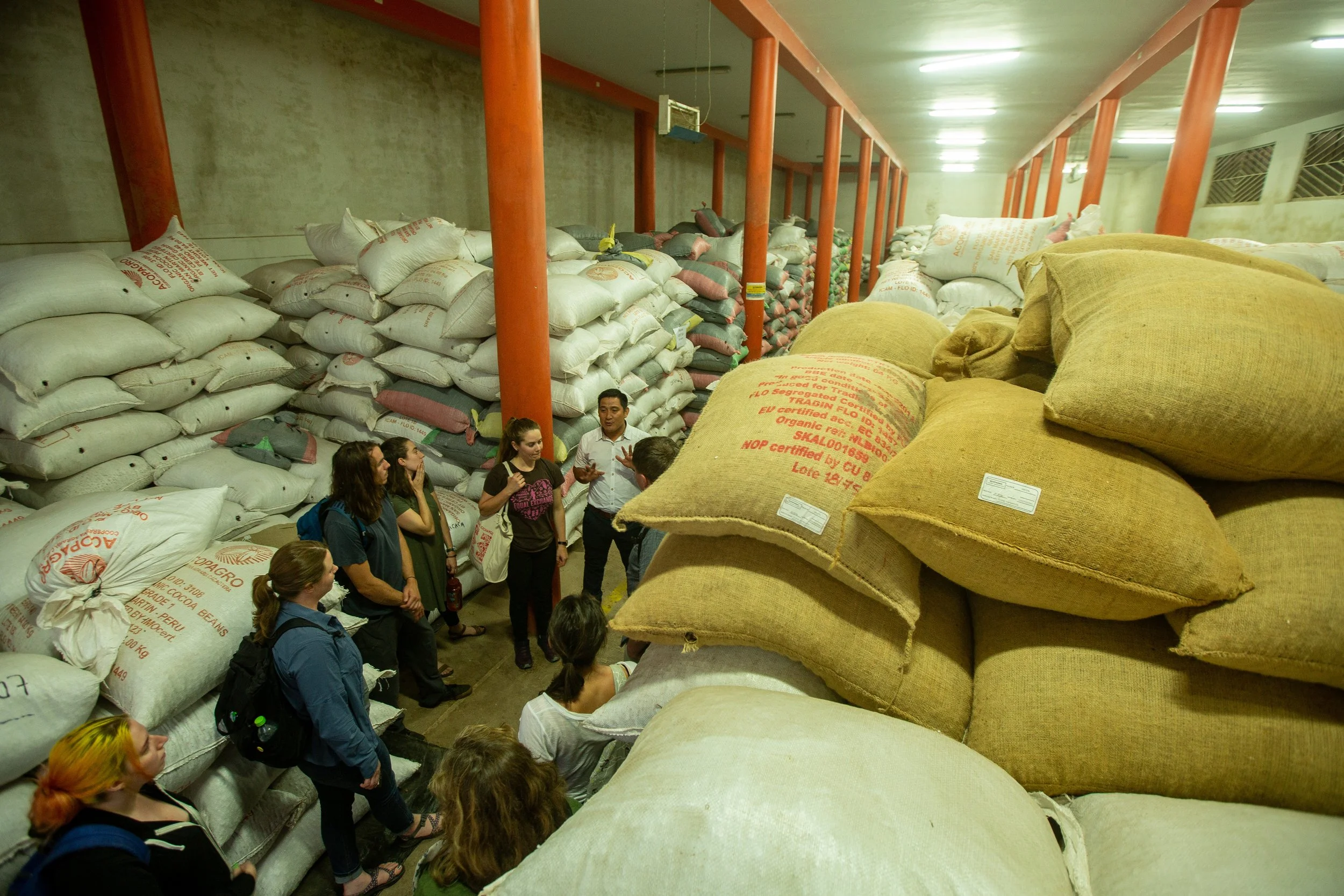
Left: Cristian Aveiro of Manduvirá sugar co-op in Paraguay. Right: Equal Exchange staff visiting ACOPAGRO co-op in Peru.
Looking forward
Tariffs on cocoa were reversed as we headed into winter, and since then, the cocoa commodity market price has steadily come down to that $4,000 referenced above. Some pressure has been released from this system, at least for the time being. That said, some products from our line were already cut, and the remaining products have inventory costs that still reflect what we paid when we imported (at high market and high tariff costs). The future of the global supply, market price, and threatened tariffs remains uncertain. We still have a product line and direct, open communication with our partners—both farmers and manufacturers.
The conventional corporate model that leads to cheap chocolate on the shelves is the very same model that extracts from the land and the workers, which contributed to this cocoa supply and market price crisis. One could argue that the biggest danger after this year of a triple threat in cocoa would be for the marketplace to just sigh in relief, try to forget, and revert to the old ways. It is likely that most of the industry will do just that. The model that we are fighting to keep alive is one that invests in farms—in the people and the farming practices—that give us a fighting chance to adapt and advance.